

Not sure which cruise to choose? Click to see a complete listing and comparison of all our birding cruises.
With its rugged mountains, sweeping tundra, and enormous ice caps, Spitsbergen embodies the high Arctic. The largest island in the Svalbard Archipelago--part of Norway to its south--lies just 650 miles from the North Pole. Beginning in the capital of Longyearbyen, the world's northernmost town with over 1000 inhabitants, we'll explore coastlines and deep-cut fjords on our way to the north end of the island aboard the 110-passenger M/V Ortelius. The ship is ideal for expedition travel and is comfortable, eminently practical, and perfectly designed for smooth cruising in Arctic waters. As the ship will rarely be far from land and will spend a large amount of time sailing in narrow fjords and straits, the sea conditions should be calm with the chances of rough water very minimal.
Known as a region that is uncompromising to those species that inhabit it, the Arctic is one of the most beautiful and yet least birded areas of the world. The list of birds occurring in the far North is small when compared to southern reaches, but the quality of the species is great. The magnificent bird cliffs along the Spitsbergen coast are a breeding ground for tens of thousands of Black-legged Kittiwakes, Black Guillemots, and Thick-billed Murres, with Atlantic Puffins and Northern Fulmars also in abundance on or around the cliffs. A rare treat will be a visit to a Dovekie colony where thousands of these tiny seabirds nest in the talus slopes, safe from the bullying of larger murres on the cliff ledges, marauding Glaucous Gulls, and out of reach of patrolling Arctic Foxes. On the flowering tundra, often with a nearby group of indigenous Svalbard Reindeer standing guard, Pink-footed Geese, Rock Ptarmigan, Purple Sandpipers, Arctic Terns, Great Skua, and Parasitic and Long-tailed jaegers can be found within earshot of singing Snow Buntings, the only likely passerine on Spitsbergen. Then there is that elusive and rapidly declining gull--the ghostly Ivory, a bird so dependent on ice-covered environs it seems to have mystical qualities.
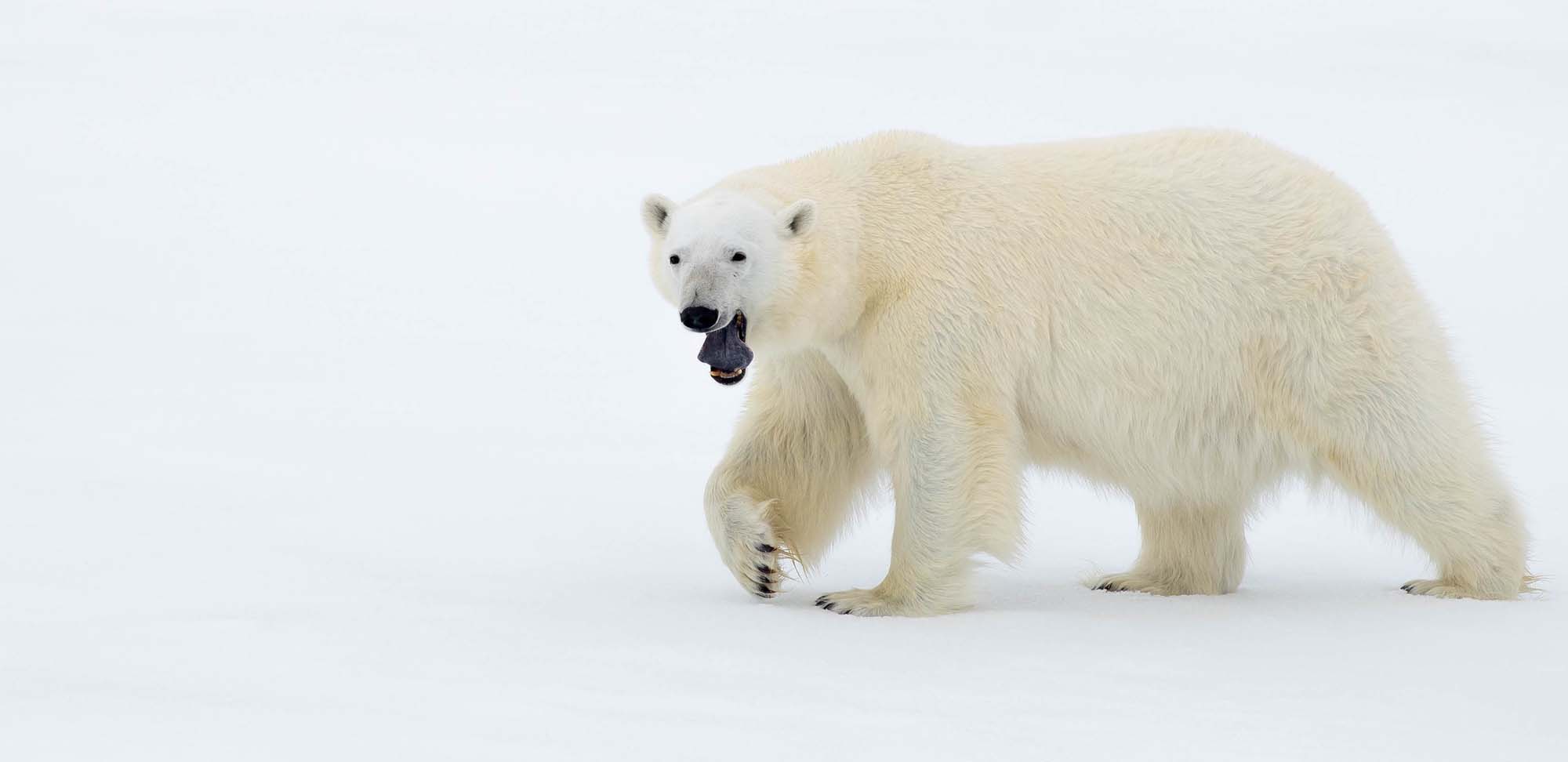
Spitsbergen's coastal waters support several seal species including Bearded, Ringed, and Harp, and we will seek out a pod of Walrus, perhaps basking on a stony beach. Both Minke and Fin whales are frequently seen. And, with 20 percent of the world's Polar Bear population occurring here, spotting a few of these engaging mammals is a priority for most of the passengers and crew as we cruise the pack ice above 80 degrees North latitude.
Select the KEY INFO tab or click here for our itinerary plus space requests, status, fees, limits, and guides for any departure.